Before You Write the Check, Show Up in Person: What Volunteering Reveals That Donations Never Can
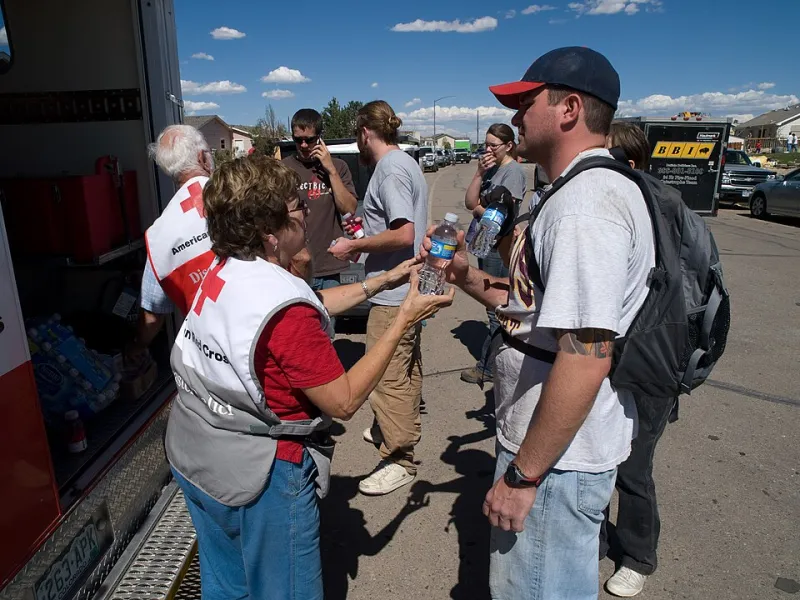
Photo: Michael Rieger, Public domain, via Wikimedia Commons
There's a version of charitable giving that feels very clean. You find a reputable nonprofit, you enter your card number, you get a receipt, and you move on with your day feeling like you've done something good. And you have. Nobody's disputing that.
But here's a question worth sitting with: do you actually know what happens after that money leaves your account?
For a lot of donors, the honest answer is no. The charity sends a thank-you email. Maybe a quarterly newsletter. But the real work — the messy, complicated, human work — stays invisible. And that invisibility can quietly erode the connection between you and the cause you thought you cared about.
That's why some of the most thoughtful donors in the country have started doing something counterintuitive: they volunteer first, donate later.
Why Smart Nonprofits Are Recruiting Volunteers Over One-Time Donors
This might sound backwards. Aren't nonprofits always begging for money? Sure — but experienced development directors will tell you that a one-time donor who gives $100 and disappears is worth far less than a volunteer who eventually becomes a committed, recurring supporter.
The numbers bear this out. Studies on nonprofit donor behavior consistently show that people who volunteer with an organization before making their first financial contribution tend to give more over time, give more consistently, and stick around longer than donors who engage only through transactions.
The reason isn't complicated: volunteering creates ownership. When you've spent a Saturday sorting donations at a food pantry or tutoring kids at an after-school program, you're not just a name in a database. You've seen the operation. You know the staff. You understand the gap between what the organization has and what it actually needs. That knowledge transforms giving from a feel-good transaction into something closer to an investment you genuinely believe in.
The Due Diligence You Can't Get From a Charity Rating Website
Charity watchdog sites are useful. Checking a nonprofit's financials, their overhead ratio, and their accountability practices is smart donor behavior. But those tools only tell you what an organization reports about itself.
Volunteering tells you what's actually going on.
Is the staff enthusiastic and mission-driven, or are they burned out and demoralized? Is the leadership responsive and present, or invisible? Are the programs well-organized, or is everything held together with duct tape and wishful thinking? Is there a culture of transparency, or do people get evasive when you ask basic questions?
You can't learn any of that from a 990 filing. But you can learn all of it in a few volunteer shifts.
This is especially valuable when you're considering a larger donation — something in the hundreds or thousands of dollars. Before committing that kind of money, spending a few hours on the ground is the most practical due diligence you can do. It's free, it's useful to the organization regardless of what you decide, and it gives you information no website can provide.
What Volunteering Does to Your Relationship With Giving
There's a psychological dimension here that's worth naming. Donating money is abstract. Volunteering is concrete. When you write a check, you're trusting a system. When you show up in person, you're participating in one.
That shift from passive funder to active participant changes how you experience generosity. Donors who volunteer describe their giving as feeling more meaningful, more connected, and less like an obligation they're trying to discharge. They're also less susceptible to the kind of donor fatigue that comes from feeling like your money disappears into a black hole.
There's also a practical learning curve that volunteering accelerates. You start to understand what resources nonprofits actually lack — and it's often not money. It might be skilled labor. It might be professional services like legal help, marketing, or bookkeeping. It might be connections to other organizations or community leaders. Understanding these gaps makes you a more sophisticated donor, even when you do eventually write that check.
The Volunteer-to-Donor Pathway in Practice
So how does this actually work? Here's a loose framework for donors who want to try a more grounded approach.
Start with curiosity, not commitment. Reach out to a nonprofit you're considering supporting and ask if they have one-time volunteer opportunities — a single event, a weekend project, something with no strings attached. Most organizations welcome this.
Pay attention to the culture. Are volunteers treated as valued contributors or as free labor? Does the organization communicate clearly about what you'll be doing and why it matters? First impressions of organizational culture tend to be accurate.
Ask questions. Good nonprofits love donors who are curious. Ask staff what their biggest operational challenges are. Ask what a donation of a specific size could actually accomplish. Ask what they wish more donors understood about their work.
Let the experience inform your giving decision. Maybe you volunteer and decide this organization isn't the right fit — that's genuinely useful information. Maybe you volunteer and feel more committed than ever. Either outcome serves you.
The Money Still Matters — Just More Intentionally
None of this is an argument against financial donations. Nonprofits need money. Unrestricted cash is one of the most flexible and valuable things a donor can provide. The point isn't to replace financial giving with volunteering — it's to let volunteering inform and deepen your financial giving.
At Donate For Free, we believe the best giving relationships are built on genuine understanding. Showing up before you donate doesn't just help you give more wisely. It helps the organizations you support understand that they have a real partner in you — not just a transaction.