Trade What You Have, Give What Matters: The Rise of Community Donation Swaps
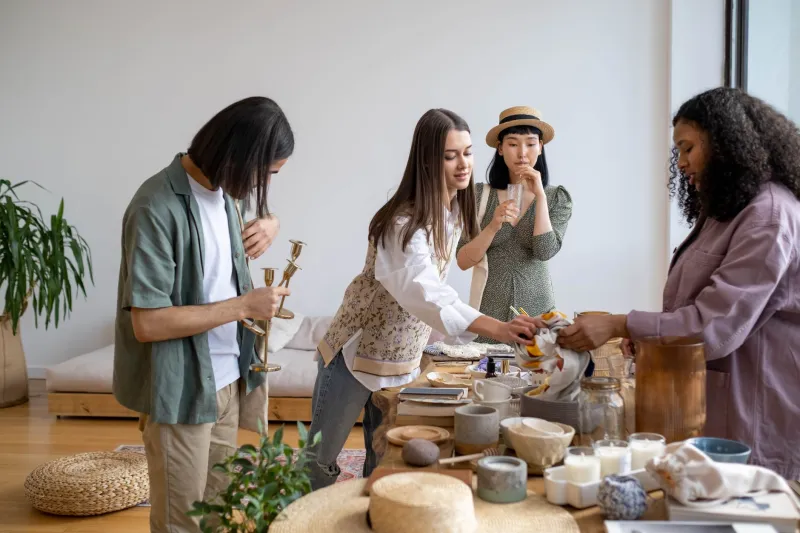
Imagine you're a graphic designer with a full schedule and a tight budget. Your neighbor restores furniture in her spare time. A retired teacher down the street tutors kids on weekends. None of you have much cash to throw at your favorite causes right now — but together, you might be sitting on hundreds of dollars worth of charitable impact.
That's the basic logic behind community donation swaps, a quietly growing movement where people trade skills, services, goods, and time in ways that ultimately funnel more value toward nonprofits and causes they care about. It sounds a little abstract at first, but once you see it in action, it's hard not to wonder why this hasn't been mainstream for years.
What Even Is a Donation Swap?
At its core, a donation swap is any arrangement where two or more people exchange something of value — and at least part of that exchange gets directed toward a charitable cause rather than purely personal benefit.
That might look like:
- Two neighbors trading baked goods for homemade candles, then pooling the savings to donate to a local food bank
- A Facebook group where members offer services (dog walking, lawn mowing, tutoring) and request that recipients make a small donation to a nonprofit of the giver's choice instead of paying cash
- A neighborhood swap meet where all proceeds from unsold items go to a chosen charity at the end of the day
- Skill-sharing circles where professionals offer free consultations in exchange for participants donating to a cause
The formats vary widely, but the underlying principle stays the same: what you already have — your time, your abilities, your extra stuff — can be converted into real charitable value without anyone reaching for their credit card.
Why This Is Taking Off Right Now
A few things are fueling this trend simultaneously. First, cost of living pressures have made traditional cash donations feel less accessible for a lot of Americans. When the budget is tight, even a $25 donation can feel like a stretch. But trading a skill you already have? That's a different mental calculation entirely.
Second, platforms that make peer-to-peer exchange easy have become ubiquitous. Facebook Groups, Nextdoor, Buy Nothing communities, and even WhatsApp group chats have lowered the friction of organizing local exchanges to almost zero. You don't need a nonprofit board or a 501(c)(3) to get something like this off the ground — you just need a few willing neighbors and a shared cause.
Third — and maybe most interestingly — people are hungry for giving experiences that feel personal and connected. Writing a check to a large organization can feel anonymous. Helping someone in your community and watching that help ripple outward toward a cause you both care about? That hits differently.
Skill-Sharing Circles: The Organized Version
Some communities have taken the swap concept and given it a more structured home. Skill-sharing circles — sometimes called time banks or talent exchanges — operate on the idea that everyone has something worth offering, and that offering it creates a kind of social currency.
In a typical setup, members log the hours they spend helping others. Those hours can then be "spent" to request help from someone else in the group. Some circles go a step further by designating a portion of every exchange toward a community charity fund. Members vote on where the fund goes each quarter, and the whole group gets to see the collective impact of their individual contributions.
These aren't fringe experiments. Time banking has roots going back decades, and today there are hundreds of active time banks across the US, many of them with explicit charitable giving components built right in.
The Swap Meet, Reimagined
Another popular format is the charitable swap meet — basically a community yard sale or goods exchange where the "profit" flows to a cause instead of individuals' pockets.
Here's a common version: a neighborhood group organizes a swap day where everyone brings items they no longer need. People trade freely, and anything left over at the end gets donated to a local shelter or thrift store that benefits a nonprofit. Some groups go further and charge a small entry fee or ask for cash donations at the door, all of which goes to a pre-selected charity.
These events tend to generate a lot of enthusiasm precisely because they're social. You're not just dropping a bag of old clothes at a collection bin — you're spending a Saturday morning with your community, laughing over someone's 2009 bread maker, and knowing that the whole thing is moving resources toward people who need them.
How to Start Your Own Swap Community
You don't need much to get something like this going. A few starting points:
Pick a focus. Decide whether your swap will center on goods, skills, or services — or some combination. Keeping it focused at first makes it easier to manage.
Choose a beneficiary upfront. Agree on a charity or cause before the first exchange happens. This gives the whole thing a sense of shared purpose and makes it easier to track collective impact.
Use a platform people already know. A dedicated Facebook Group, a Nextdoor post, or even a shared Google Sheet can be enough to coordinate a small community swap. You don't need a fancy app.
Keep records. Track what gets exchanged and what value gets directed toward the cause. This isn't just good bookkeeping — it's motivating. Seeing that your little swap community has collectively generated $400 in donated goods or services over three months is the kind of thing that keeps people engaged.
Celebrate the wins. Share updates with the group. Let people know when a donation reaches its destination. Tag the nonprofit if they're on social media. Make the impact visible.
The Bigger Picture
What's exciting about the donation swap trend isn't just that it helps people give more without spending more — though it absolutely does that. It's that it reframes generosity as something inherently communal rather than purely transactional.
When giving becomes a shared activity, something built on relationship and mutual exchange, it tends to become more sustainable too. People who might have quietly stopped donating during a financially tough stretch find themselves staying connected to causes through the community around them.
That's a pretty powerful thing to build out of a skill trade and a spare Saturday morning. And honestly? It's exactly the kind of creative, accessible giving that the world could use a lot more of right now.